

In a substack article, “The Hidden Danger in Becoming Orthodox That Is Rarely Talked About,” Kenneth B. shares his experience as an Orthodox catechist. As he instructs people in their journey to Orthodoxy, he finds they usually “do not bring with them the moral chaos of pagan temples, but they often carry something subtler and, in its own way, equally difficult to address.” This “something subtler” is a tendency to reduce Christianity to the cerebral at the expense of a lived and practical faith.
They come with a deeply ingrained habit of treating the faith primarily as an intellectual exercise.
One notices, almost immediately, a kind of restless energy. There is an eagerness to read, to analyze, to compare. Councils are studied, doctrines are parsed, distinctions are drawn with remarkable precision.
It is not uncommon to find a newcomer who has read more theology in six months than many lifelong Orthodox Christians. Yet there is often an unspoken assumption beneath all this activity, that Christianity is something to be figured out, rather than something to be lived.
Kenneth takes a different approach. Rather than giving new converts what they want to hear, he challenges them with a more embodied approach to the faith.
Yet when we turn to the words of Christ, we find something at once simpler and more demanding. “Love the Lord your God with all your heart, and with all your soul, and with all your mind, and with all your strength. And love your neighbor as yourself.” There is nothing here about mastering theological systems. There is nothing about winning arguments. There is only the call to love, which is both the easiest thing to understand and the hardest thing to do. Many who come into the Church want to complicate this.
I think these concerns are spot on, and I would go further by connecting Kenneth’s observations to a kind of operational Gnosticism (something Kenneth himself did in a later article).
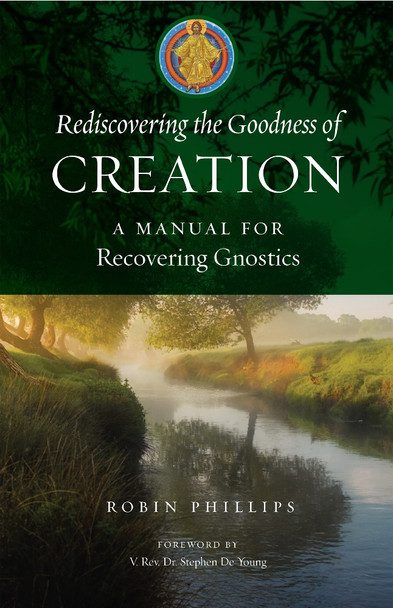
In the Eastern Orthodox tradition, we like to congratulate ourselves on being incarnational and avoiding the gnostic separation of the spiritual and the material. I even published an anti-gnostic book for Ancient Faith, which Orthodox people love to use when congratulating themselves on not being gnostic. In fact, some reviewers have even polemicized the book against Protestants. Yet our own culture of learning within Eastern Orthodoxy often leans heavily toward abstract intellectualism, without always attending to how the heaven-earth synthesis of the Holy Communions translates into the nitty gritty of community life.

It isn’t just the new converts that are to blame here. When I lived in the Pacific Northwest, I sat through many catechism classes in which Orthodox theology remained largely abstract, disconnected from the ordinary demands of communal life. Similarly, our seminaries emphasize church history, the minutiae of liturgical theology, patristic studies, the grammar of theological languages, while devoting comparatively fewer resources to the practical domains required for building strong communities, or addressing the needs of people who have been wounded by anti-culture.
It is controversial for me to say this, but this issue is even systemic at our seminaries. A professor at one of the seminaries told me that instruction in counseling and psychology—two areas in which Orthodoxy is on the front lines of addressing the crises of anti-culture as manifested in addiction, mental illness, anxiety, depression, and related disorders—is chronically under-resourced. One seminarian described to me the strange spectacle of classes that would typically offer tools for pastoral counseling being diverted into the study of pastoral-care theory. Instead of studying how to help people in need, they studied the theology of the Good Shepherd.
Not surprisingly, clergy coming out of Orthodox seminaries often feel unqualified to address the crisis of anti-culture and loneliness as it manifests itself in mental health challenges, trauma, family breakdown, addiction, and so forth. The result is that we often outsource these problems to secular experts, leading to further fragmentation, perpetuating the sense in which the church is only one compartment in a life with multiple centers. This is analogous to what has occurred in the death industry, where a domain once integral to the life of the Church has gradually become an area in which the Church participated in its own marginalization.
I will be addressing these issues in my keynote speech at the upcoming Parish Life Conference for the Dioceses of New York and Washington, D.C. & Oakland, Charleston and the Mid-Atlantic. Part of the problem, I will argue, is that the Eucharist is often treated like magic, as if its efficacy for our community will be automatic, without requiring strategy and planning to connect the dots between theory and praxis.
I plan to address the operational Gnosticism, not as it exists in modern evangelicalism, but as it has found root within the culture of Orthodoxy. I will be challenging us to think of the Eucharist like conception: just as human conception starts a process that culminates in a person with a unique personality, so the Eucharist starts a process that culminates in a parish culture with a unique personality. But it takes intentionality and strategy to flesh out the heaven-earth synthesis of Holy Communion into Christian education, reading and prayer groups, addiction recovery resources, art, music, poetry, food traditions—in short, a shared common life and associated culture. It takes strategy, research and planning to develop infrastructures to address the concrete human needs that arise in community, and to put together counseling resources, benevolence ministries, addiction recovery resources, accountability groups, and so forth. Just because everyone is partaking in the blessed sacraments, doesn’t mean community will just happen, nor that the community will be healthy. We have to work to translate God’s presence into all the nooks and crannies of parish life.
Often we give insufficient attention to that translation, as if the fruits of the Eucharist are automatic. Somehow we are less susceptible to this misplaced monergism when it comes to the other sacraments. When you are baptized, you don’t just forget about it; rather, you have to engage in everything involved in a transformed life to make your baptism a reality. Or again, when a man and wife are joined in the sacrament of marriage, or when a clergyman is ordained into the sacrament of priesthood, the initial sacrament begins a work that will only flourish with perseverance, creativity, strategic planning, and day to day participation with the energies of God. Similarly, when we join with each other in Holy Communion, that begins the real work of learning to live as a community.
 Here the Benedictine monasteries can serve as examples. They fostered community not simply in the technical sense that they were communes where people lived together, but also because these monks were proactive in facilitating community. These communities functioned as hospitals, centers of learning, centers for collecting and transmitting herbal knowledge, places that facilitated poverty relief, mental health counseling—encompassing much of what we would now classify as social work. They created the type of shared public life that, according to Christopher Dawson, is the essence of culture. As a result, these monastic communities blessed the villages around them and societies outside their own walls. And in the process, they saved civilization.
If we want to save our civilization, it can only happen with the same model. But the process of saving civilization doesn’t begin by thinking about civilization, or knowing all the details about patristic studies and the grammar of theological languages. It begins by reaching out to the people in your parish community who are in need, who are struggling, who are lonely, and then being proactive to cultivate a healthy community where people can come and be healed.
And that brings us back to Kenneth B.’s excellent article, “The Hidden Danger in Becoming Orthodox That Is Rarely Talked About,”
My primary responsibility, as I see it, is to remind those who are inquiring what it actually means to be a Christian.
- It means to love the people God has placed in your life.
- It means to love not only those who are easy to love, but also those who are difficult, inconvenient, or even hurtful.
- It means reaching out to someone you have not seen at church in some time, asking how they are, and perhaps inviting them for coffee.
- It means attending to the small, quiet acts of kindness that rarely attract notice, but which shape the soul.
Further Reading
- The Orthobro Phenomenon
- Hospitality as a Christian Practice
- St. Porphyrios on the “Spiritual” Things that Distract
- The Cross of Least Resistance
- Letting Go of Troubled Thoughts
- How We Are Raising Fragile Children, Why Pain isn’t Always Bad, and How Healthy Activities Protect us from Addiction
- The Power of Baby Steps in a Superman Culture
- Use Positive Self-Talk to Overcome Anxiety