

In a reflection on reading for The Free Press, Spencer Klavan observed that “the art of really taking in literature is one of the great liberal arts—it’s an act of pure freedom, something you do for no other reason than to do it.”
If that’s true, then what happens then if people stop reading? And what happens in a society where AI is being aggressively marketed precisely for its capacity to free us from needing to read?
The question is highly relevant now that, to quote again from Klavan’s piece, “there is now a whole genre of social media posts about how to extract the value from books without reading them.” Klavan cites Davie Fogarty who exults that “AI reasoning models can distill key insights and tell you exactly how to implement them based on everything they know about you.” Klavan cites a number of other thinkers suggesting that, increasingly, people are conceptualizing the value of reading primarily in terms of information extraction.
I think Klavan’s concern is legitimate. A few years ago, I was corresponding with someone who asked me about Eastern Orthodoxy after seeing my book Rediscovering the Goodness of Creation. I replied that if he wanted to learn more about Orthodoxy, he might benefit from reading Metropolitan Anthony Bloom’s book Courage to Pray. Metropolitan Anthony slowly walks the reader through various passages about prayer in the New Testament, drawing applications for our spiritual walk and illustrating his points with stories. Through these stories—drawn from both scripture and his own experience—the reader becomes connected to a cloud of witnesses across time and feels emboldened by the courage of those who have gone before. One feels supported by Metropolitan Anthony himself, whose pastoral spirit and gentleness shine on every page, urging us toward deeper intimacy with Christ. After recommending Courage to Pray to my friend, he wrote back to me the following,
“I asked ChatGPT to list the 25 most important positions expressed in this book and found myself amazed with how they reflect my own views and experiences, except for what he implies about the value of ‘corporate’ prayer, which I find mostly useless.”
What caught me off guard in this response was not that he asked ChatGPT about the book, but that it seems as if he approached the book as mere information, a series of position points. But as I thought about it further, I realized that perhaps LLMs nudge us to approach texts in this way. On the principle that the medium is the message, the message of LLMs may be that everything is reducible to information. And, of course, once something is reduced to information, then we are in control of it—we can evaluate it based on how it conforms to our own preconceived notions, which seems to be what my friend, at least in part, did.
This is the sort of approach to books that Klavan warned us against in his article for The Free Press, an approach that sees texts as primarily a series of information points. Again from Klavan:
It would be one thing if books were being replaced because we’d found a yet deeper way of encountering other minds and other times, or if we were going back to the days of long walks in the agora and debates on the nature of being. But one poster on X explained how he uses AI to “extract…the information” from a book that would otherwise take an hour to read—”and then I drink coffee for 58 minutes.” If you want a picture of our bookless future, imagine a row of influencers staring out their high-rise windows, their inner lives zeroed out to a total blank, sipping coffee forever.”
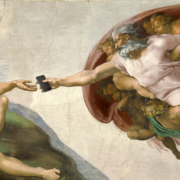
If we lose the habits of reading, it will be because we first forgot what reading was actually for. Reading is not primarily about the extraction of information, but about meeting an entire range of intellectual and spiritual needs unique to humans. Among our intellectual needs is the need for slow rather than quick thinking, the need to experience struggle and confusion as preparatory to comprehension, the need to view life through other people’s perspectives, the need for regular contemplation, the need for boredom and stillness as incubation periods for higher-level cognition and creativity, and then need to wrestle with ambiguity before reaching closure. If you think about it, a good novel, especially one in the classic tradition, cultivates many of these important habits of mind. There will be times when the novel is slow, even boring. There will be times with the narrative resolutions are unclear, forcing us to sit with the ambiguity of the characters. We will be invited to inhabit multiple perspectives rather than just our own. We will come away from each novel with an increased capacity for complexity. And if the novel is long, we will be forced to slow down, to think slowly, to linger, to contemplate. In this way, a good novel meets many basic human intellectual needs. Yet in the world of AI, many of our basic intellectual needs appear, not as needs at all, but as problems to be fixed. When these and other needs appear as encumbrances, then we are primed to welcome technologies that promise to remove these perceived encumbrances from our lives.
Further Reading
- The New King’s English and the Homogenization of Thought
- Lost & Profound: How One Woman Found, Lost, and Re-Discovered the Intellectual Life
- Intellectual Loneliness
- Yeonmi Park on Reading
- Intellectual Loneliness
- The Joys of Reading: How I Lost and Rediscovered Leisure Reading
- Hollowing out the Habits of Attention (Part 2)